Index
Index
IPO Analysis · Part 1 of 13
Rohit had the WhatsApp forward open on one screen and the IPO application form open on the other. The grey market premium quoted in the message had jumped 40% in two days, every group he was in was calling it a sure listing-day winner, and the subscription numbers were already climbing past 20x. He had about ten minutes before the day's bidding window closed. What he didn't have was a single number from the company's own balance sheet — and that, more than the GMP, is what should have decided his next move.
Practical Tips
Start With the Business, Not the GMP
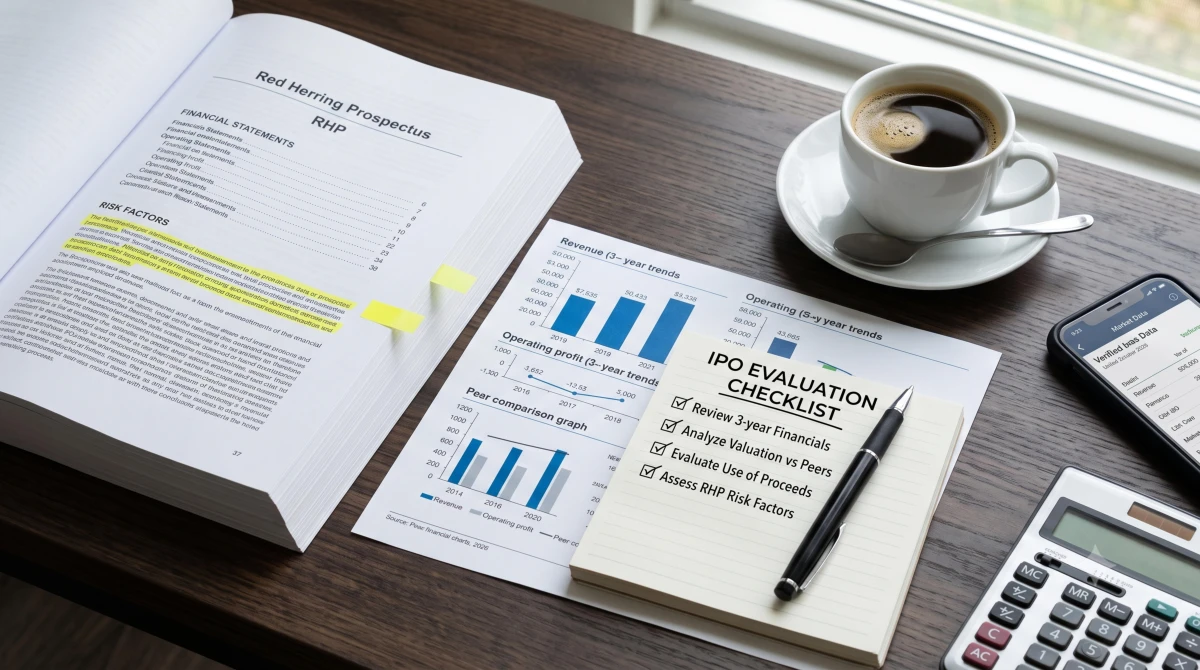
Pull the company's restated financial statements from the RHP and look at three years of revenue, operating profit, and net profit — not one good quarter dressed up for the prospectus. Growth that comes from a genuine increase in customers or volumes is different from growth that comes from a one-time asset sale or a tax credit, so check what's actually driving the numbers before trusting the trend line. Watch cash flow from operations against reported profit too; a company that shows profit on paper but negative operating cash flow year after year is usually funding growth with debt or short-term window dressing, not the business itself. Tata Technologies went on to become one of the decade's standout listings largely because the underlying engineering business was genuinely profitable and growing — the market simply hadn't priced it in yet. Paytm is the inverse lesson: a weak and uncertain path to profitability was visible in the RHP well before the stock fell nearly 27% on listing day.
Check Whether the Price Actually Makes Sense
Once the business checks out, work out whether the price does. Compare the IPO's P/E and other key ratios against already-listed companies in the same sector — if the asking multiple is meaningfully higher with no clear reason (faster growth, better margins, a moat competitors don't have), that premium is a bet on hype, not fundamentals. Equally important is where the money is actually going. A fresh issue that funds expansion, debt repayment, or working capital is different from an Offer for Sale, where existing shareholders are simply cashing out and the company itself gets nothing. A heavy OFS component can signal promoters exiting rather than funding growth, which is worth asking "why now" about. This isn't a hypothetical concern: of 96 mainboard IPOs in 2025, 49 listed positively while 47 ended in losses — closer to a coin flip than retail investors tend to assume, and overpriced issues with weak fundamentals made up a large share of the losers.
Practical Tips
Read the Risk Factors Before You Read Anything Else
Every RHP has a Risk Factors chapter, and it is the most carefully lawyered, most honest part of the entire document — which is exactly why almost no retail investor reads it. This is where you'll find promoter share pledges, pending litigation, customer or supplier concentration, related-party transactions, and regulatory dependencies the company is legally required to disclose. None of this shows up in a GMP quote or a subscription chart. A company with 60% of revenue coming from two customers, or a promoter who has pledged a large chunk of their holding against personal loans, is disclosing real risk — treat it as such rather than scrolling past it to get to the financials everyone else is looking at.
Treat GMP and Subscription Numbers as Mood, Not Math
GMP and subscription data measure sentiment in the days before listing — not the value of the underlying business, and not reliably even that. Swiggy is the clearest recent case: its GMP stayed muted before listing, yet the stock went on to reward investors as the company delivered on fundamentals. The reverse happens just as often with hyped issues that list below issue price once the froth clears. The broader 2025 data backs this up: average first-day listing gains fell to roughly 8.4%, down from about 29% in 2024, as the market grew more selective about separating fundamentals from hype. There's also a behavioural pattern worth knowing: a 2024 SEBI study found 54% of allotted IPO shares are sold within a week of listing, which tells you how many applicants were chasing a quick flip rather than evaluating the business at all — and why GMP, driven heavily by that same crowd, is a sentiment gauge rather than a valuation tool.
Score It Before You Apply
A simple scorecard turns all of this into a five-minute check instead of a gut call:
| Factor | Looks healthy when... | Flag it if... |
|---|---|---|
| 3-year revenue & profit | Steady growth, backed by real operating cash flow | Profit comes from one-time items, cash flow lags earnings |
| Valuation vs. peers | P/E broadly in line with listed comparables | Materially higher multiple with no stated reason |
| Use of proceeds | Mostly fresh issue funding growth or debt repayment | Mostly OFS, promoters exiting with no clear "why now" |
| RHP risk factors | Specific, business-linked risks, clean promoter holding | Vague boilerplate, heavy litigation, pledged promoter shares |
| GMP & subscription | One data point among several | The only thing you checked |
Rohit ran the hyped IPO from that WhatsApp forward through this exact grid. Margins were thin, two-thirds of the issue was an OFS with no explanation offered, and the risk factors section ran to three pages of near-identical boilerplate. He skipped it and applied instead to a quieter issue the same week — steady three-year profit growth, a mostly fresh issue, and a clean RHP. The one he skipped listed below its issue price within the month. The one he applied to listed at a modest premium and held it. Neither outcome was guaranteed going in, but only one of the two decisions was actually informed.
KEY TAKEAWAYS
Start with three years of revenue and profit, checked against real operating cash flow, not just the headline numbers. Compare the issue's valuation to already-listed peers rather than taking the price band at face value. Treat a large Offer for Sale component as a question to answer, not an automatic red flag. Read the Risk Factors chapter of the RHP before you read the GMP. Remember that GMP and subscription numbers reflect short-term sentiment, not business value — 2025's data alone showed listing-day outcomes splitting close to evenly, and roughly half of allotted shares getting flipped within a week regardless of how a company actually performed afterward. Finally, keep IPO exposure to a measured slice of your overall portfolio rather than betting heavily on any single issue, however loud the hype around it.