Index
Index
General IPO · Part 5 of 12
Priya puts ₹10 lakh of her own money into an IPO bid. A lender adds ₹90 lakh. A week later she holds shares worth about ₹4 lakh, owes interest on the full ₹90 lakh, and must repay the loan whether or not the stock rises.
That is IPO funding in one sentence: a short-term loan that lets you bid in the HNI category far beyond your own cash, hoping the listing gain outruns the interest bill. It is legal, regulated and popular with large investors. It is also an easy way to lose money on a good company.
Practical Tips
Who lends, and how much
Three routes exist, each with its own ceiling.
| Route | Who lends | Cap per borrower | Margin / LTV | Security |
|---|---|---|---|---|
| IPO financing (NBFC) | NBFC arms of brokers | ₹1 crore | Set by lender, based on expected HNI demand | Allotted shares pledged |
| IPO financing (bank) | Commercial banks | ₹25 lakh, across the banking system | Minimum 25% margin | Lien on allotted shares |
| Loan against shares | Banks and NBFCs | Banks: ₹1 crore | NBFCs: 50% loan-to-value | Your existing portfolio |
The NBFC ceiling dates from April 2022. The bank limit rose from ₹10 lakh to ₹25 lakh under RBI's revised capital market exposure directions, which were deferred to take effect on 1 July 2026. RBI clarified that the ₹25 lakh limit applies across all banks combined, so you cannot stack it bank by bank.
Many HNIs get around the NBFC cap through loan against shares or property from several lenders. That is legal because the loan is collateralised, but it puts your existing portfolio at risk, not just your IPO margin. Lenders may also set stricter limits than RBI's, so ask for their current terms.
The real cost: interest on shares you never receive
The HNI quota is 15% of the issue. One-third goes to small NII bids (₹2–10 lakh, allotted by lottery) and two-thirds to big NII bids (above ₹10 lakh, allotted proportionately). Funded bids sit in the big category because proportionate allotment is predictable: if the category is 25x subscribed, you receive about one-twenty-fifth of what you bid.
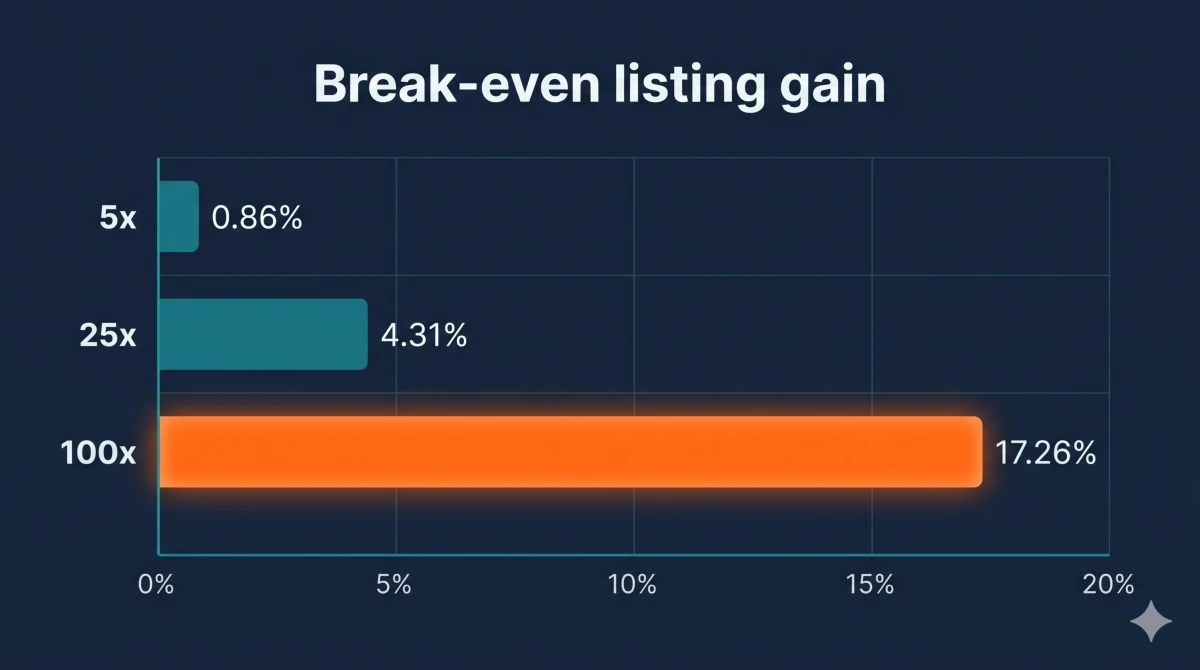
That is where leverage bites. Priya bids ₹1 crore and borrows ₹90 lakh at 10% for 7 days. Interest is ₹17,260 however many shares she receives. At 25x she keeps about ₹4 lakh of shares, so the interest equals 4.3% of her allotment.
| bNII subscription | Allotment on ₹1 crore bid | Break-even listing gain |
|---|---|---|
| 5x | ₹20,00,000 | 0.86% |
| 25x | ₹4,00,000 | 4.31% |
| 100x | ₹1,00,000 | 17.26% |
The hotter the issue, the higher the bar. A 100x category needs a 17% listing pop before you earn a rupee.
Practical Tips
Same loan, four outcomes
Priya's bid is the same each time: ₹1 crore, ₹90 lakh borrowed, ₹17,260 interest, 25x subscription, so a ₹4 lakh allotment.
LG Electronics India (October 2025) shows the good case. Its bNII category was 24.68x subscribed and the stock listed on NSE at ₹1,710.10 against a ₹1,140 issue price, a 50% gain. Paytm (November 2021) shows the bad one, listing 27% below issue price.
| Listing move | Gain/loss on ₹4 lakh | Interest | Net result | Return on ₹10 lakh margin |
|---|---|---|---|---|
| +50% (LG-like) | +₹2,00,000 | −₹17,260 | +₹1,82,740 | +18.3% |
| +10% | +₹40,000 | −₹17,260 | +₹22,740 | +2.3% |
| 0% | ₹0 | −₹17,260 | −₹17,260 | −1.7% |
| −27% (Paytm-like) | −₹1,08,000 | −₹17,260 | −₹1,25,260 | −12.5% |
Subscription matters as much as listing. In a 5x category the same −27% listing would cost about ₹5.6 lakh, because Priya would hold ₹20 lakh of falling shares.
The table is illustrative: LG's subscription and listing figures are real, but Priya's loan terms are assumed.
Two myths that cost HNIs money
Myth: no allotment means no cost. Reality: the lender's interest is owed whether or not you are allotted, and it is typically collected upfront. A blank allotment still leaves you down the interest bill.
Myth: a high GMP settles it. Reality: grey market premiums are unofficial and can miss either way. Treat GMP as one input, not a guarantee.
A five-minute check before you borrow
Ask the lender for the full cost in rupees: interest, processing fee and GST. Ask for the margin and how long the loan runs if listing slips. Then run the break-even formula using the final-day bNII subscription, not the day-one figure. Decide your exit before the loan is drawn, because a funded position is a listing-day trade, not an investment.
Compare the funded bid with the alternative: a ₹2–10 lakh application on your own money in the small NII category, where a lottery gives you one lot at no interest.
Priya does this on her next two IPOs. One is running 100x in bNII, which needs a 17% pop to break even, so she skips it. The other is at 5x with a 0.9% break-even, so she bids. She does not borrow on hope. She borrows when the maths clears the bar.
KEY TAKEAWAYS
IPO funding is a short-term loan for bids above ₹2 lakh, mostly used in the big NII (above ₹10 lakh) category.
- NBFCs can lend up to ₹1 crore per borrower. Banks can lend up to ₹25 lakh per individual, with at least 25% margin, across the banking system.
- Interest is owed even if you get no allotment, and it is usually paid upfront.
- Break-even depends on subscription: 0.86% at 5x, 4.31% at 25x and 17.26% at 100x in our example.
- Loan against shares avoids the NBFC IPO cap but puts your existing portfolio at risk.
Run the break-even maths on the final day, and plan your exit before you borrow.