
Harikanta Overseas Limited
1. Overview
Harikanta Overseas Limited is a Surat-based manufacturer and exporter of synthetic and natural textile fabrics, operating in India's largest synthetic textile hub. The Company was incorporated in 2018 as a private limited entity by the Gotawala family — a third-generation textile business family — with the specific objective of accessing international markets for its fabric products. It was converted to a public limited company in February 2025.
The Company's core competence lies in weaving Ikat fabrics, polyester garment fabrics, saree fabrics, dhupion fabrics, poly linen, and natural fiber fabrics, primarily catering to women's wear end-uses across both domestic and export markets. The promoters — Hardik Gotawala, Abhishek Gotawala, and Nilesh Gotawala — maintain direct operational involvement in procurement, production, and sales, drawing on a combined family legacy in the textile trade dating back to manual power loom operations.
The Company's manufacturing facility is located at Sai Ram Industrial Estate-2, Bamroli, Surat, Gujarat — India's global hub for synthetic fabric production — giving it access to raw material suppliers, skilled weavers, and logistics infrastructure.
2. Business Model and Revenue Streams
Dual Revenue Channel
Harikanta operates through two primary revenue channels:
Export Sales (Primary): The Company exports Ikat and Dhupion fabrics to Cambodia, Thailand, Bahrain, and Singapore, constituting the majority of revenue. Merchant exports (sold to Indian merchant exporters for re-export) supplement direct exports.
Domestic Sales (Growing): Direct B2B sales to textile and garment manufacturers across Gujarat, Maharashtra, Rajasthan, Delhi, Karnataka, Punjab, and Uttar Pradesh, with a focus on saree and kurta fabric buyers.
Revenue Bifurcation
| Channel | Revenue | % |
|---|---|---|
| Direct Export | 15.55 | 44.24% |
| Merchant Export | 6.96 | 19.80% |
| Total Export | 22.52 | 64.04% |
| Domestic Sales | 11.99 | 34.11% |
| Duty Drawback | 0.64 | 1.85% |
| Revenue from Operations | 35.17 | 100% |
Export revenue grew from ~100% in FY23/FY24 (when domestic was negligible) to a more balanced 64%/36% split in FY25, indicating successful domestic channel development. The domestic channel also carries relatively higher blended margins as it does not carry export-related logistics costs.
3. Products and Service Portfolio
Product Lines and Applications
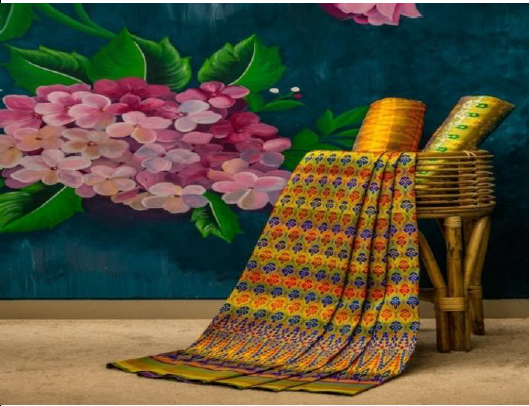
1. Ikat Fabrics — Primary Export Driver The flagship product, Ikat fabrics, are woven with pre-dyed yarns to create distinctive visual patterns celebrated across Asian markets. Primarily exported to Cambodia, Thailand, Singapore, and Bahrain, Ikat accounts for the majority of the Company's export revenue. These fabrics are used in traditional dress and saree manufacturing across Southeast and South Asia, and as decorative textiles.
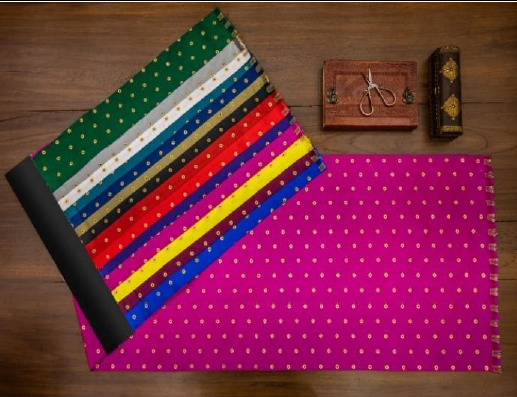
2. Polyester Garment Fabrics — Versatile Mid-Tier Segment Durable and high-volume, polyester garment fabrics address the broad mid-market garment manufacturing segment. Suited for a wide range of garment applications including kurtas, salwar-kameez, and western wear.
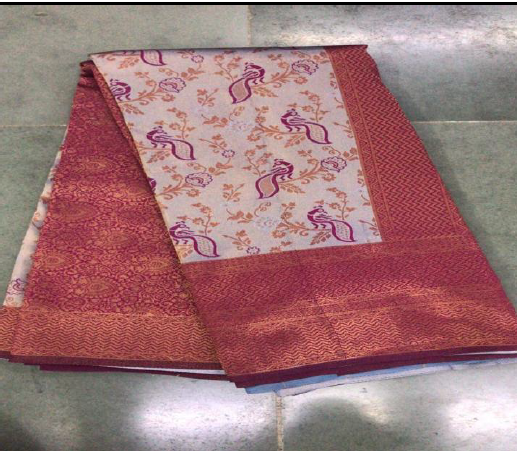
3. Saree Fabrics — Core Domestic Product Harikanta's saree fabrics are sold to saree manufacturers and weavers across Gujarat, Rajasthan, and Uttar Pradesh. The Company combines traditional design aesthetics with modern production efficiency to serve this large, price-sensitive domestic market.
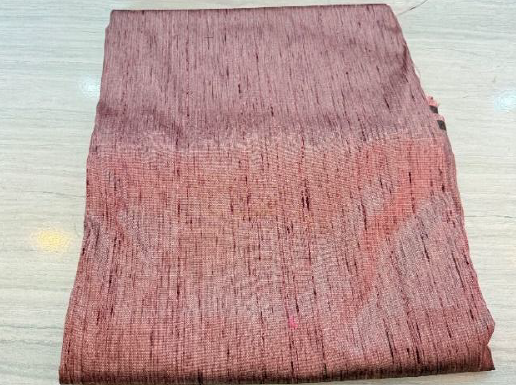
4. Dhupion Fabrics — Premium Segment A silk-like fabric valued for its luxurious texture, dhupion is primarily used in men's kurtas and as an export fabric. Prized in premium ethnic wear, this product carries higher per-metre realizations.
5. Poly Linen and Natural Fiber Fabrics — Emerging Sustainability Segment The Company offers both synthetic and natural fiber options. The natural fiber segment is being scaled to address the growing consumer preference for sustainable and eco-friendly textile inputs, representing a future growth vector. Nylon fabrics are planned as a next product addition.
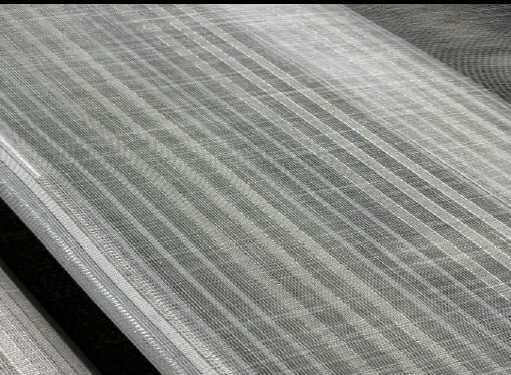
Manufacturing Infrastructure
The Company operates owned and rented Jacquard Rapier Looms — the critical piece of equipment for producing complex woven patterns including Ikat and saree fabrics:
- Owned machinery: 6 Jacquard Rapier Looms (High Speed), 10 Jacquard Rapier Looms (2600 Low Speed), 24 Jacquard Rapier Looms (1400 Low Speed), 36 Rapier Machines, plus wrapping, rolling, and finishing equipment
- Rented machinery: 8 additional Jacquard Rapier Looms (2600 Low Speed) from associate concerns (Abhishek Tax Fab and Tripura Textile), January 2025–December 2026
Total production occurs across six plots at Sai Ram Industrial Estate-2, Bamroli, with sanctioned power load of ~240 KW across the facilities.
4. Key Business Strengths
- Third-generation family textile expertise — Promoters carry legacy knowledge from manual power loom origins to modern Jacquard production, enabling deep product understanding and customer relationship continuity
- Surat ecosystem advantage — Located in the world's largest synthetic textile production hub, giving Harikanta proximity to raw material suppliers, skilled workers, and established export logistics chains
- Strong export market position across Southeast Asia and the Gulf — 64% of FY25 revenue from exports provides significant revenue diversification from domestic textile cycle fluctuations
- Customization and flexibility — Ability to serve both high-volume clients and specialized smaller orders enables broad customer coverage and premium pricing for bespoke design fabrics
5. Future Growth Strategy
- Factory expansion (₹5.40 Cr IPO allocation): Constructing ~44,893 sq. ft. of new facility space at Diamond Industrial Park, Sachin, Surat — expected to ~5× current factory footprint and support significant volume scale-up
- Plant and machinery addition (₹9.32 Cr IPO allocation): In-house yarn processing machines to be installed, reducing dependence on third-party yarn processors and lowering input costs while improving supply chain control
- Nylon fabric addition to the product portfolio — addressing a distinct market segment and diversifying revenue away from saree/Ikat concentration
- Natural fiber fabric scaling to capture premium domestic and international demand from sustainability-conscious buyers in Europe and premium Asian markets
- Geographic expansion in export markets — targeting new countries in the GCC and Southeast Asia beyond existing Cambodia, Thailand, Bahrain, and Singapore customers
- Domestic channel development — further penetrating Rajasthan, Uttar Pradesh, Karnataka, and Punjab markets where the Company has recently established initial commercial relationships
- Working capital strengthening (₹4.75 Cr): Enhanced trade credit capacity will support scaling of both export and domestic order books simultaneously

















Delete Comment?
Are you sure you want to delete this comment? This action cannot be undone.
Discussion
Join the discussion!
Log In to CommentNo comments yet. Be the first to share your thoughts!