Aastha Spintex Limited
1. Overview
Aastha Spintex Limited is a Gujarat-based cotton yarn manufacturer engaged in the business of manufacturing and trading of carded, combed and compact combed cotton yarns and cotton bales. The Company was originally incorporated as Aastha Spintex Private Limited on August 12, 2013 and was converted into a public limited company in February 2025. It operates exclusively in the business-to-business (B2B) segment, supplying its products to textile manufacturers, yarn exporters, bulk purchasers and fabric processors.
The Company operates a semi-automated and integrated spinning and ginning Manufacturing Facility located at Halvad, District Morbi, Gujarat, situated in one of India's major cotton-growing regions. As on the date of the RHP, the facility has an installed cotton yarn production capacity of 7,700 MT per annum through 25,920 spindles across 15 compact ring spinning machines, and a cotton bale production capacity of 12,000 MT per annum through 28 ginning machines. The Manufacturing Facility spans a total land area of approximately 65,762 sq. m. with built-up area covering 30,397.11 sq. m., leaving substantial vacant land for expansion. Operations run 24 hours per day on a 3-shift basis, typically for 365 days a year.
The Company produces 100% cotton yarns in counts ranging from Ne 26 to Ne 40 in carded, combed and combed compact varieties, used by customers in end-use segments including denim, terry towels, shirting, sheeting, sweaters, socks, bottom wear, home textiles and industrial fabrics. The Company also markets cotton seed by-products (used in oil extraction and animal feed) and cotton waste by-products (used in non-woven fabrics and open-end yarns), which provide additional revenue streams. The Company has also entered into a Share Purchase Agreement to acquire 100% equity in Falcon Yarns Private Limited, which will boost spinning capacity from 7,700 MT to 17,457 MT per annum post-acquisition.
2. Business Model and Revenue Streams
Revenue Composition by Product (FY 2025)
| Product | Production (MT) | Sales (MT) | Sales (₹ in Cr) | Capacity Utilisation |
|---|---|---|---|---|
| Cotton Yarn | 7,436.00 | 6,965.00 | 183.83 | 96.57% |
| Cotton Bales | 9,897.00 | 7,314.00 | 115.29 | 82.48% |
| Cotton Seed By-product (Ginning) | NA | 6,309.71 | 21.83 | NA |
| Cotton Waste By-product (Spinning) | NA | 2,577.16 | 22.72 | NA |
Sales Channel & Geographic Mix
Dual sales framework: Direct sales within Gujarat + Reseller arrangement with 7 Seas Impex for sales outside Gujarat and exports.
This structure allows the Company to focus on core manufacturing while leveraging 7 Seas Impex's operational, regulatory and logistical capabilities for non-Gujarat markets.
Gujarat (direct) accounted for ~62% of FY25 total sales; balance routed through reseller and direct sales to other states (Andhra Pradesh, Madhya Pradesh, Maharashtra, Tamil Nadu, Telangana, West Bengal, Haryana).
Customer Concentration & Dependency
| Metric | 9M FY26 | FY25 | FY24 | FY23 |
|---|---|---|---|---|
| 7 Seas Impex (cotton yarn share of product revenue) | 19.47% | 31.15% | 46.96% | 63.37% |
| Elkins Tradelink Ltd. (cotton yarn share) | 1.84% | 5.60% | 6.72% | 3.43% |
| Top 10 customers (% of revenue from sale of products) | — | 59.94% | 84.71% | 80.88% |
| Number of customers served | 145 | 231 | 78 | 85 |
| Repeat customers | 69 (47.59%) | 40 (17.32%) | 32 (40.51%) | 42 (48.84%) |
Reliance on 7 Seas Impex as a single reseller represents the largest customer-side concentration risk, although dependence has materially declined from FY23.
Over the last three Fiscals, the Company has served more than 250 customers, of which 14 have been associated for over 5 years.
Procurement Model
- Hedging-based procurement: Yarn orders are quoted at prevailing cotton bale rates, with corresponding cotton bale procurement locked at order confirmation.
- Seasonal ginning: Ginning unit operates for ~6–7 months annually (mid-September/October through March).
- Buffer stock strategy: Excess cotton bales procured during peak harvest season (October–March) to support uninterrupted spinning during off-season.
Sourced from more than 125 suppliers in the last three Fiscals; top 10 suppliers contributed 73.05%, 79.62% and 44.30% of total purchases in FY25, FY24 and FY23 respectively. 6 of the top 10 suppliers have a >5-year relationship.
3. Products and Service Portfolio
Product Lines
| Segment | Description | Key Use Cases |
|---|---|---|
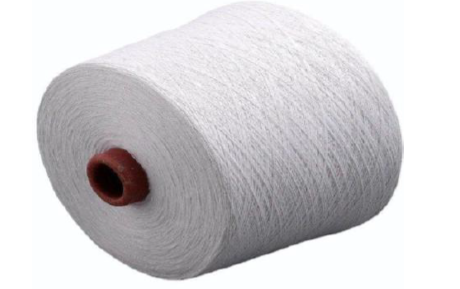
| Cotton Yarn (core) | 100% cotton yarns in counts Ne 26 to Ne 40 — carded, combed, combed compact | Denim, terry towels, shirting, sheeting, sweaters, socks, bottom wear, home textiles, industrial fabrics |
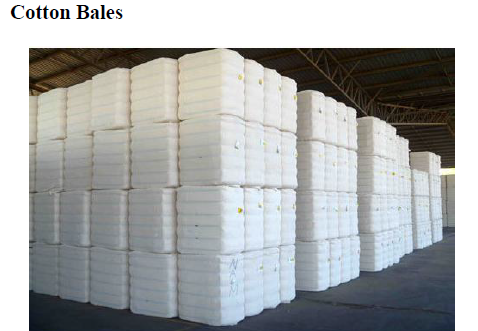
| Cotton Bales | Pressed cotton lint from ginning | Captive yarn production + external supply to spinning mills |
| Cotton Seed (Ginning by-product) | Seeds separated during ginning | Oil extraction, animal feed |
| Cotton Waste (Spinning by-product) | Comber, licker-in, hard waste | Non-woven fabrics, open-end yarn manufacturing |
Manufacturing Capacity & Utilisation (FY25)
| Particulars | Installed Capacity (MT) | Utilised Capacity (MT) | Utilisation |
|---|---|---|---|
| Ginning Division | 12,000 | 9,897 | 82.48% |
| Spinning Division | 7,700 | 7,436 | 96.57% |
Spinning capacity utilisation of 96.57% in FY25 indicates the unit is operating near saturation, underscoring the strategic rationale for the Falcon Yarns acquisition.
Post-acquisition of Falcon, total annual spinning capacity will rise from 7,700 MT to 17,457 MT per annum — a 126.7% increase.
Renewable Energy Infrastructure
1 MW rooftop solar + 4 MW ground-mounted solar + 2.7 MW wind = 7.7 MW total captive renewable capacity.
Meets approximately 80% of plant's total power requirement.
FY25 power cost savings: Net amount adjusted in gross bill due to captive power generation: ₹9,06 Cr (55.20% saving in total power expenses).
4. Key Business Strengths
- Integrated cotton spinning infrastructure: Vertically integrated ginning-to-spinning operations at a single strategically located facility, providing operational control and quality assurance across the cotton value chain.
- Strategic Gujarat location: Halvad facility in proximity to cotton-growing regions; access to NH-27, 135 km from Kandla Port and 35 km from Navkar ICD — enabling export logistics efficiency.
- Substantial vacant land for expansion: ~35,365 sq. m. vacant land (53.78% of total) at existing facility offering scope for organic capacity expansion without greenfield site acquisition.
- Renewable energy edge: 7.7 MW of captive renewable capacity meeting ~80% of power needs, structurally lowering manufacturing costs and improving margin resilience.
- Long-standing customer base: 14 customers with >5 years association; 47.59% repeat customer ratio in 9M FY26.
- Experienced promoter-led management: Promoters are actively involved in operations with deep textile industry experience; production head Patel Yogesh Purshotamdas brings over three decades of textile industry experience.
- Hedging-based procurement model: Order-linked raw material lock-in approach minimises exposure to cotton price volatility.
5. Future Growth Strategy
- Inorganic expansion via Falcon Yarns acquisition: 100% equity acquisition of Falcon Yarns Private Limited to be funded substantially through IPO proceeds (₹11,151 lakhs for purchase consideration + ₹1,000 lakhs for working capital ICDs), increasing spinning capacity from 7,700 MT to 17,457 MT per annum.
- Geographic diversification beyond Gujarat: Plan to expand direct sales operations into other Indian states and export markets, reducing structural reliance on 7 Seas Impex as the primary outside-Gujarat distribution channel.
- Capacity utilisation upside: Existing spinning unit running at ~96.57% utilisation in FY25; Falcon acquisition addresses the saturation bottleneck.
- Customer base expansion: Continued focus on adding new customers (191 new customers added in FY25 alone) while strengthening repeat-customer relationships.
- Operational efficiency and manufacturing excellence: Investment in modern spinning infrastructure, in-house testing laboratories, automation and process control to reduce waste and optimise resource utilisation.
- Renewable energy scale-up: Continued strategic positioning around clean energy to improve cost competitiveness and ESG profile, in line with national climate goals.
- Product portfolio enhancement: Use acquisition platform to broaden cotton yarn product mix and strengthen position across the textile value chain.









Delete Comment?
Are you sure you want to delete this comment? This action cannot be undone.
Discussion
Join the discussion!
Log In to CommentNo comments yet. Be the first to share your thoughts!