LEAP India Limited
1. Overview
LEAP India Limited operates in the asset pooling / returnable packaging segment of India's supply chain management industry, offering pallets, containers, and material handling equipment (MHE) on a "share and reuse" (pooling) basis rather than selling these assets outright. Incorporated in 2013 and headquartered in Mumbai, the Company has scaled into what it describes, citing an independent Frost & Sullivan (F&S) industry report commissioned for the offer, as India's largest on-demand asset pooling provider by number of pooled assets.
As of March 31, 2026, the Company held 14.70 million revenue-generating assets (pallets, containers, and MHEs), up from 13.30 million in FY2025 and 7.92 million in FY2024 — a compound expansion of the asset base of roughly 36% annually over the two-year period. This scale is supported by a pan-India network of over 10,100 customer touchpoints and 29 fulfilment centres, serving more than 1,000 customers, including blue-chip names such as Hindustan Coca-Cola Beverages, Marico, Daikin Airconditioning India, Panasonic Life Solutions, Haier Appliances, and Daimler India Commercial Vehicles. Revenue from operations grew from ₹364.97 Cr in FY2024 to ₹729.53 Cr in FY2026, while PAT rose from ₹37.17 Cr to ₹62.34 Cr over the same period, with the Company remaining PAT-positive since 2020.
A defining strategic event in the reporting period was the acquisition of CHEP India in January 2025, which the Company integrated to consolidate leadership in the container-pooling segment and expand its combined customer base and fulfilment network. The Company's subsidiy, TARON, is separately positioned as the leading forklift-pooling and lithium-ion MHE player in India per the F&S Report. Geographically, the business is India-focused with a pan-India footprint, and the RHP references a foreign subsidiary (LEAP Gulf Company) as an early step toward wider geographic reach, though the overwhelming majority of disclosed operations and revenue remain domestic.
2. Business Model and Revenue Streams
Revenue Segmentation
The Company reports Total Income across three internally tracked categories, providing visibility into the relative weight of its core pooling business versus ancillary and MHE-specific revenue (₹ Cr):
| Segment | FY2026 | % | FY2025 | % | FY2024 | % |
|---|---|---|---|---|---|---|
| Asset Pooling (excluding MHE) | 616.88 | 82.6% | 384.22 | 79.2% | 299.28 | 80.5% |
| MHE Pooling | 115.18 | 15.4% | 88.67 | 18.3% | 67.58 | 18.2% |
| Others (investment income, insurance gains, lease termination gains) | 15.29 | 2.0% | 12.14 | 2.5% | 5.08 | 1.4% |
| Total Income | 747.36 | 100% | 485.03 | 100% | 371.94 | 100% |
Asset pooling (excluding MHE) — i.e., the core pallet and container pooling business — is unambiguously the primary revenue driver, consistently contributing ~80%+ of Total Income across all three fiscal years, with MHE pooling a meaningful but secondary contributor at roughly 15–18%.
Business Model: Pooling, Not Ownership Transfer
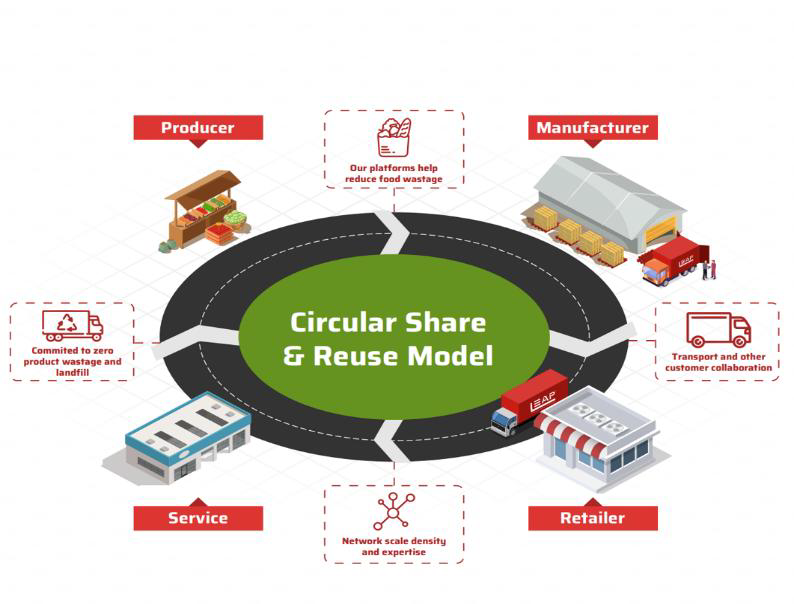
LEAP India does not sell pallets, containers, or MHEs to customers. Instead, it retains asset ownership and hires out these assets on a pooling basis — customers pay for use of a shared pool of standardized assets rather than purchasing and maintaining their own. This is an asset-light model for the customer (the customer avoids capex and maintenance costs) but an asset-heavy model for LEAP India itself, which must continuously invest in its fixed asset base (pallets, containers, MHEs) to grow.
Within this model, the Company distinguishes:
- Static hire: assets hired for use at a single customer location for a set period, then returned.
- Movement hire: assets used to transport goods across multiple locations via supply chain partners, rather than returning to a single point — a mode the Company explicitly states it is expanding and expects to contribute a growing share of revenue.
Client Concentration and Dependency
The RHP highlights low customer churn as a structural feature: churn among the top 100 customers was 0.00% in FY2026, down from 0.19% in FY2025 and 0.75% in FY2024. The majority of the top 10 customers by revenue have relationships exceeding five years. This reflects high switching costs — a customer that re-palletizes its supply chain around LEAP India's standardized assets faces significant disruption in switching providers, a structural retention advantage the Company cites as a barrier to entry for competitors.
On the supply side, the Company depends on top-ten suppliers for procurement of assets and ancillary services (e.g., transportation); these suppliers contributed 63.27%, 60.00%, and 77.00% of total purchases in FY2026, FY2025, and FY2024, respectively — indicating meaningful vendor concentration risk, disclosed as a company-specific risk factor.
3. Products and Service Portfolio
Core Asset Categories
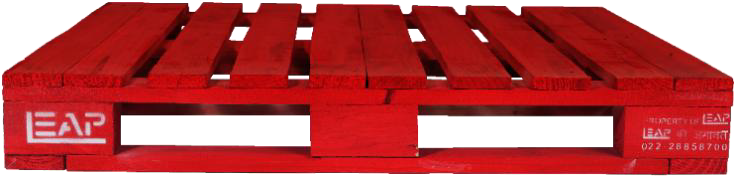
Pallets — Flat carrier structures supporting goods during production, storage, and transport, handled via forklifts, pallet jacks, or conveyors. LEAP India uses Forest Stewardship Council (FSC) certified spruce-pine-fir (SPF) wood and operates repair/maintenance programs to extend asset life. Pallets remain the largest single asset category by volume and revenue contribution.
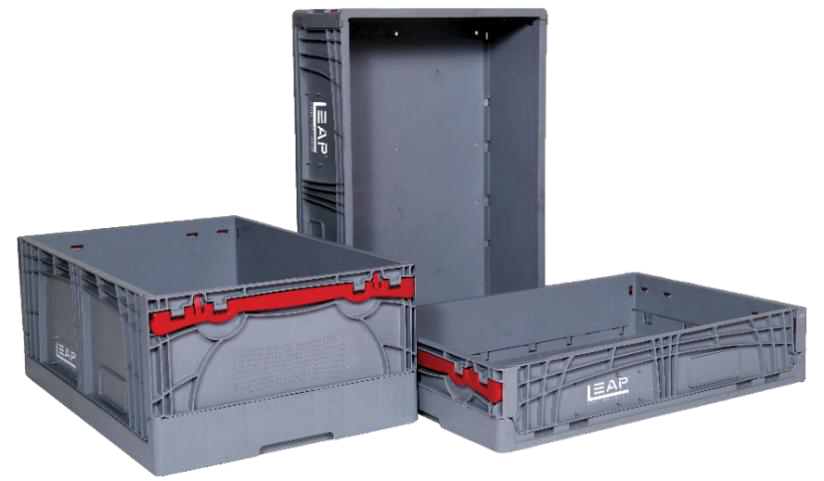
Containers — Used for storage and transport of goods, reducing product damage and reliance on single-use corrugated packaging. The CHEP India acquisition specifically strengthened LEAP India's position in this segment, where CHEP India was previously recognized as the market leader in container-segment asset pooling (FY2024, per F&S Report).
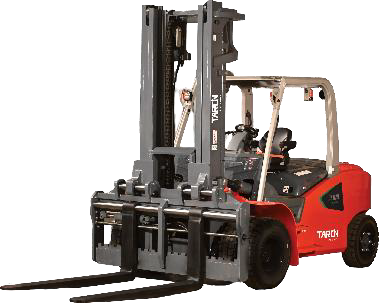
Material Handling Equipment (MHE) — Complementary equipment including lithium-ion forklifts, reach trucks, stackers, hand pallet trucks, and battery-operated pallet trucks (BOPTs). This segment is operated substantially through subsidiary TARON, recognized per the F&S Report as India's leading forklift-pooling player and first mover in lithium-ion MHE pooling.
Operational Utilisation Metrics (Industry-Specific KPI)
For an asset-pooling business, utilisation rate — the extent to which owned assets are actually deployed at customer sites versus sitting idle — is the key operating efficiency metric, analogous to capacity utilisation in manufacturing:
| Utilisation Metric | FY2026 | FY2025 | FY2024 |
|---|---|---|---|
| Pallets | 89.34% | 87.46% | 87.75% |
| Containers | 71.68% | 76.03% | 66.17% |
| MHE | 79.79% | 81.54% | 82.50% |
Emerging vs Core Products
Beyond the three core categories, the Company has begun adding complementary products — belts, wedges, stillages, and racking — to deepen wallet share with existing customers without requiring new customer acquisition. The RHP frames this as part of a strategy to become a single-partner solution for a customer's full range of supply chain asset needs, reducing the need for customers to coordinate across multiple vendors.
4. Key Business Strengths
- Market Leadership at Scale: The largest on-demand asset pooling provider in India by number of pooled assets (14.70 million as of March 2026), with the F&S Report describing LEAP India as the only pan-India player operating pallet pooling at meaningful national scale.
- High Barriers to Entry: A combination of network scale, established customer relationships, product quality certifications, network effects, and accumulated operational knowledge that the Company argues would require substantial multi-year investment for a new entrant to replicate, with no guarantee of customer demand in the interim.
- Sticky, Low-Churn Customer Base: 0.00% churn among top-100 customers in FY2026, driven by high switching costs once a customer's supply chain is re-palletized around LEAP India's standardized asset pool.
- Consistent Profitability: PAT-positive since 2020, with EBITDA margins sustained in the 50–57% range across FY2024–FY2026, reflecting the operating leverage inherent in a scaled asset-pooling model.
- Successful M&A Integration Track Record: The CHEP India acquisition (January 2025) consolidated container-segment leadership, and the earlier SKAN Marine / TARON MHE integration nearly doubled TARON's revenue from ₹67.69 Cr (FY2024) to ₹116.60 Cr (FY2026), evidencing repeatable acquisition-integration capability.
- Technology-Enabled Operations: Proprietary MyLEAP customer platform, integration with SAP S/4HANA and Salesforce, passive RFID tracking for containers, and IoT-enabled forklift tracking, alongside ISO 27001 certification for data security — differentiators in a historically low-tech, fragmented Indian logistics sector.
- Experienced Promoter-Led Leadership: Promoter Sunu Mathew (Chairman, MD & CEO) brings 27+ years of relevant industry experience, including prior roles at CHEP India and L'Oréal India, aligning founder expertise directly with the core pooling business the Company now leads.
5. Future Growth Strategy
- Deepen Penetration in Existing Industries: Replicate proven customer success stories (e.g., converting a battery manufacturer from one-way pallets to pooling) across current verticals — FMCG, F&B, 3PL, e-commerce/quick commerce, automotive, and industrials.
- Expand into New Industry Verticals: Target adoption in textiles, paints, solar energy, pharmaceuticals, chemicals, and heavy engineering, sectors the F&S Report identifies as rapidly evolving and increasingly open to palletization.
- Extend Across the Full Supply Value Chain: Move beyond manufacturer-only engagement to embed pooling solutions with distributors and retailers, capturing a larger share of each customer's end-to-end supply chain.
- Grow the Movement-Hire Mix: Continue shifting revenue toward movement hire (multi-location asset transport) from traditional static hire, a structurally higher-value use case the Company expects to grow as a share of revenue.
- Broaden the Product Ecosystem: Add complementary asset categories (belts, wedges, stillages, racking) to existing pallet/container/MHE customers, consolidating vendor relationships and increasing wallet share per customer.
- Selective Inorganic Growth: Continue value-accretive M&A, building on the demonstrated integration success of CHEP India and TARON/SKAN Marine, to broaden platform offerings, technology capability, and geographic reach both within and outside India.
- Market Education and Ecosystem Collaboration: Deploy a dedicated team of ~579 professionals (as of March 2026) to educate prospective customers on pooling economics and sustainability benefits, while collaborating with racking system providers, robotics integrators, and logistics companies to widen the addressable ecosystem.





























Delete Comment?
Are you sure you want to delete this comment? This action cannot be undone.
Discussion
Join the discussion!
Log In to CommentNo comments yet. Be the first to share your thoughts!